
Table of Contents
There’s something magical about homemade bread—the aroma that fills your kitchen, the pride of creating something from scratch, and the unbeatable taste of fresh, warm bread straight from the oven. If you’ve ever dreamed of making artisanal ciabatta bread at home without the fuss of kneading, you’re in luck. Our Style No-Knead Ciabatta Bread recipe is the perfect solution for busy bakers who want restaurant-quality bread with minimal effort. This recipe yields two loaves of beautifully crusty, airy ciabatta that will elevate any meal, from a simple breakfast with butter to a gourmet sandwich.
The beauty of this no-knead method lies in its simplicity and the long fermentation process, which develops incredible flavor and texture. With just a few basic ingredients and some patience, you can create bread that rivals anything you’d find at a specialty bakery. Let’s dive into what makes this recipe so special and how you can master it in your own kitchen.
Key Ingredients
The secret to this Style No-Knead Ciabatta Bread lies in its carefully balanced ingredients. We use a combination of white bread flour and whole wheat flour, which gives the bread structure while adding depth of flavor. The long fermentation time allows the natural yeasts to work their magic, creating those characteristic large air holes and a slightly tangy taste that’s typical of artisan bread. The addition of olive oil in the dough adds tenderness and helps create a beautiful, golden crust.
Ingredients List
Here’s everything you’ll need to make this delicious ciabatta bread:
| Ingredient | Amount |
|---|---|
| White bread flour | 3 ½ cups (17 ½oz/496g) |
| Whole wheat flour | ½ cup (2 ½ oz/71g) |
| Salt | 1 ½ teaspoon |
| Instant yeast | ¼ teaspoon |
| Lukewarm water | 2 cups (16floz/450ml) |
| Olive oil | 1 tablespoon |
Helpful Tools
While this recipe is designed to be simple, having the right tools can make the process even easier and more successful. Here are three essential items that will help you achieve perfect results:
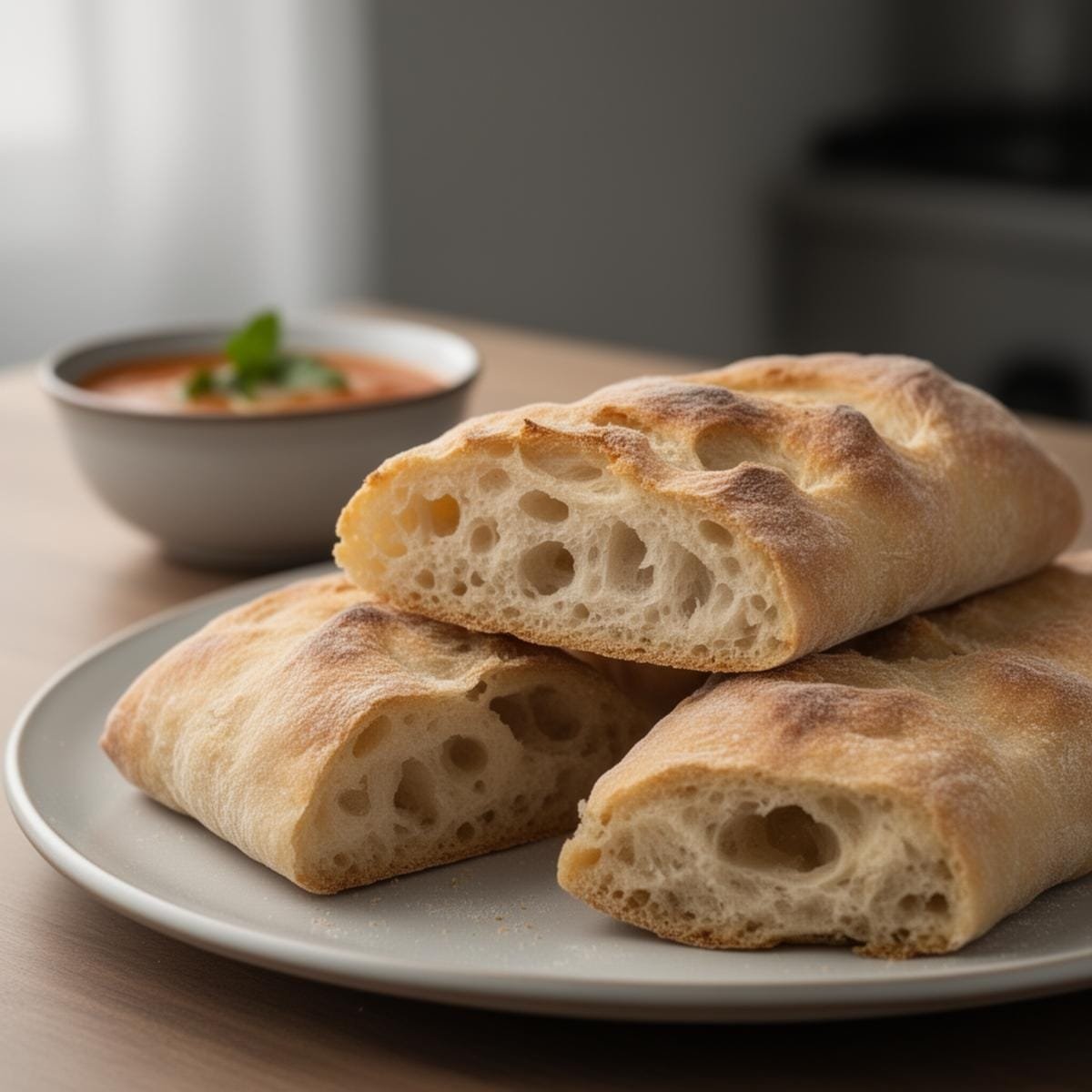
1. Large mixing bowl – You’ll need plenty of space to mix and let your dough ferment.
2. Baking sheets – Two large baking sheets: one for proofing and one for baking.
3. Parchment paper – This prevents sticking and makes transferring the delicate dough easier.
Pro-Tips
To ensure your Style No-Knead Ciabatta Bread turns out perfectly, keep these tips in mind:
1. Water temperature matters: Make sure your water is lukewarm, not hot. Water that’s too hot can kill the yeast, while water that’s too cold won’t activate it properly.
2. Don’t over-flour: This dough is meant to be wet and sticky. Resist the urge to add extra flour during mixing, as this will affect the final texture.
3. Patience is key: The long fermentation time (18 hours) is what gives this bread its incredible flavor and texture. Don’t rush this step!
4. Create steam in your oven: For the best crust, place a pan of hot water in the bottom of your oven while baking, or spritz the loaves with water before putting them in the oven.
5. Use the right technique for shaping: When transferring your dough to the baking sheet, handle it gently to preserve those air bubbles. Garlic Bread With Sliced Bread is another delicious way to use bread, but for ciabatta, gentle handling is crucial for that signature airy texture.
How to Make Style No-Knead Ciabatta Bread
Now that you have all your ingredients and tools ready, let’s walk through the process step by step:
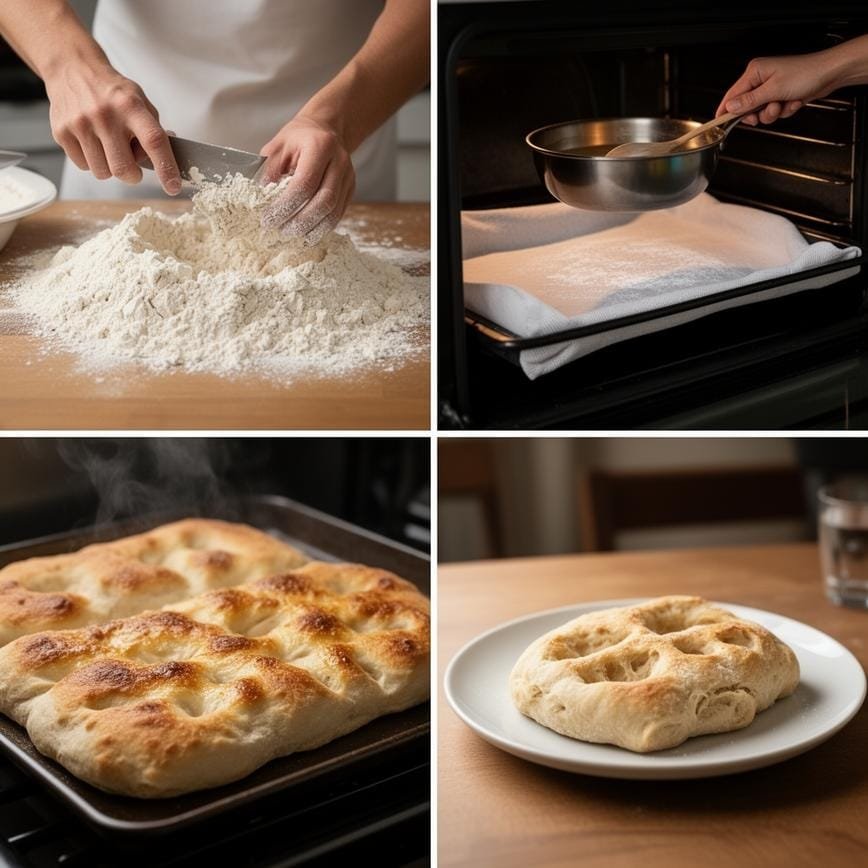
- Day 1 (The Day Before):
- 1. In a large mixing bowl, combine the white bread flour, whole wheat flour, salt, and instant yeast.
- 2. In a separate jug or measuring cup, mix together the lukewarm water and olive oil.
- 3. Pour the wet ingredients into the dry ingredients and stir with a wooden spoon or your hands until just combined. The dough will be very wet and sticky – this is exactly what you want!
- 4. Scrape down the sides of the bowl to ensure all ingredients are incorporated.
- 5. Cover the bowl with a shower cap or plastic wrap, then place a clean kitchen towel over it.
- 6. Let the dough ferment at room temperature for about 18 hours. During this time, the dough will develop flavor and texture, and you’ll see bubbles forming on the surface.
- Day 2 (The Next Day):
- 7. Prepare two large baking sheets: Line one with a clean kitchen towel and dust it liberally with flour. Line the other with parchment paper.
- 8. Uncover your fermented dough and gently knock it back (deflate it) by folding it over itself a few times.
- 9. Shape the dough into a ball, then divide it into two equal pieces.
- 10. Place the two dough pieces side by side on the floured towel, seam-side down.
- 11. Cover the dough with the kitchen towel and let it proof for 2 hours, or until it has doubled in size and bubbles have formed on the surface.
- 12. Preheat your oven to 425°F (210°C) during the last 30 minutes of proofing.
- 13. Once the dough has proofed, gently turn each loaf over and stretch it out to about 16 inches as you transfer it to the parchment-lined baking sheet. Handle the dough gently to preserve those beautiful air bubbles.
- 14. Bake for 35-40 minutes, or until the loaves are golden brown and sound hollow when tapped on the bottom.
- 15. Allow the bread to cool completely on a wire rack before slicing. This step is crucial for maintaining the bread’s structure.
Variations
While this basic recipe is delicious on its own, you can easily customize your ciabatta to suit your tastes:
1. Herb ciabatta: Add 2-3 tablespoons of chopped fresh herbs (like rosemary, thyme, or oregano) to the dough when you mix the ingredients.
2. Olive and sun-dried tomato ciabatta: Fold in ½ cup of chopped sun-dried tomatoes and ½ cup of pitted, chopped olives after the initial mixing.
3. Cheese ciabatta: Mix in 1 cup of shredded cheese (such as Parmesan, Pecorino, or sharp cheddar) with the dry ingredients for a savory twist.
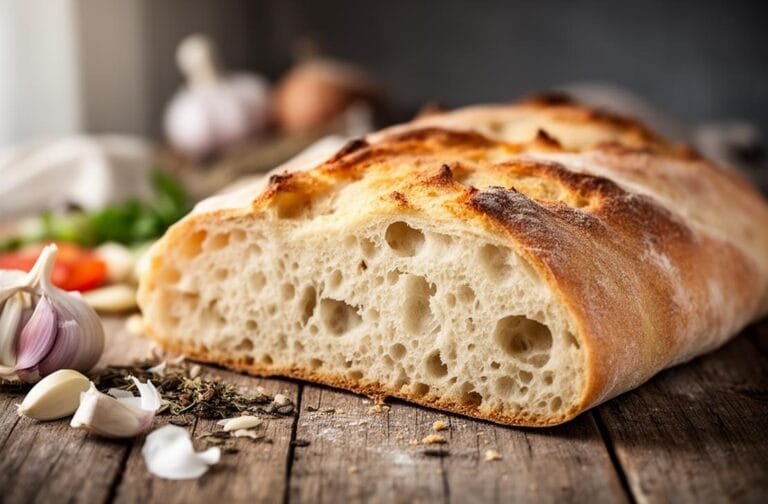
Style No-Knead Ciabatta Bread
This Bakery-Style No-Knead Ciabatta is unbelievably easy to make at home. By allowing the wet dough to ferment slowly overnight (18 hours), you develop incredible flavor and those signature large, airy bubbles without a mixer or any kneading. The result is a rustic, chewy loaf with a crisp golden crust.
- Total Time: 1260
- Yield: 2 loaves
Ingredients
3 ½ cups (496g) white bread flour (bread flour is essential for the chew)
½ cup (71g) whole wheat flour (adds depth of flavor)
1 ½ teaspoons salt
¼ teaspoon instant yeast
2 cups (450ml) lukewarm water
1 tablespoon olive oil
Extra flour for dusting (generous amount needed)
Instructions
1. **Mix Dough (Day 1):** In a large bowl, whisk together the bread flour, whole wheat flour, salt, and instant yeast. In a separate jug, mix the lukewarm water and olive oil.
2. **Combine:** Pour the wet ingredients into the dry ingredients. Mix with a wooden spoon or spatula just until a wet, sticky dough forms and no dry flour remains. Do not knead.
3. **Ferment:** Scrape down the sides of the bowl. Cover tightly with plastic wrap (or a shower cap) and a kitchen towel. Let it sit at room temperature for **18 hours**. The dough will bubble up, double in size, and develop a wobble.
4. **Prep for Shaping (Day 2):** Line one baking sheet with parchment paper. Line a second baking sheet (or work surface) with a clean kitchen towel and dust the towel *very liberally* with flour (this prevents sticking).
5. **Divide:** Uncover the bowl (the dough will be very sticky). Flour your hands and the top of the dough. Gently knock back the dough to release some gas, then turn it out onto a floured surface. Divide the dough into two equal pieces.
6. **Proof:** Shape each piece roughly into a ball or oblong shape and place them on the floured kitchen towel, spacing them apart. Dust the tops with more flour and cover with another towel. Let proof for 2 hours.
7. **Preheat:** About 30 minutes before baking, preheat your oven to 425°F (220°C).
8. **Shape & Bake:** Carefully uncover the loaves. Using the towel to help you, gently flip/turn each loaf over and stretch it slightly to about 16 inches long. Transfer them onto the parchment-lined baking sheet.
9. Bake for 35–40 minutes, or until the loaves are deep golden brown and sound hollow when tapped on the bottom.
10. **Cool:** Transfer to a wire rack and let cool completely before slicing to preserve the airy texture.
Notes
Flour Type: Bread flour has a higher protein content than all-purpose flour, which is crucial for supporting the large air bubbles in ciabatta.
Sticky Dough: This dough is supposed to be very wet (high hydration). Do not be tempted to add more flour into the dough itself, only use flour for dusting the outside when handling.
The Towel Trick: Proofing on a floured towel helps wick a tiny bit of moisture from the surface, giving you a better crust, and makes it easier to handle the delicate dough.
Storage: Best eaten fresh, but can be frozen for up to 3 months.
- Prep Time: 20
- Cook Time: 40
- Category: Bread
- Method: Bake
- Cuisine: Italian
- Diet: Vegan
FAQ
Q: Can I make this bread without whole wheat flour?
A: Yes, you can substitute all-purpose flour for the whole wheat flour if needed. However, the whole wheat flour adds flavor and nutrients, so it’s recommended if you have it on hand.
Q: What if my dough doesn’t rise properly?
A: Make sure your yeast is fresh and your water is at the right temperature. Also, ensure your proofing area is warm but not too hot. If your kitchen is cool, you can place the dough in a slightly warmed oven (turned off) to help it rise.
Q: How should I store leftover ciabatta?
A: Store cooled bread in a paper bag at room temperature for up to 2 days. For longer storage, slice the bread and freeze it in a freezer-safe bag. Toast frozen slices directly from the freezer for the best results
There you have it—our delicious Style No-Knead Ciabatta Bread recipe that’s sure to impress. With its crispy crust, airy interior, and simple preparation method, this bread is perfect for both novice and experienced bakers. The long fermentation process develops complex flavors that make this bread truly special, while the no-knead method keeps the process accessible and stress-free.
Whether you’re serving it alongside a hearty soup, using it for the ultimate sandwich, or simply enjoying it with butter and jam, this ciabatta bread will quickly become a staple in your kitchen. The best part? Once you master this basic recipe, the possibilities for variations are endless.
For more delicious ideas, follow me on Pinterest