
Table of Contents
There’s something timeless about a glass of classic lemonade on a warm day. The bright citrus zing balanced with just the right amount of sweetness makes it a staple at picnics, barbecues, and lazy afternoons on the porch.
While countless variations exist, mastering the traditional recipe gives you a solid foundation to experiment with herbs, fruits, or spices later on. In this guide, we’ll walk through every detail you need to know—from selecting the perfect lemons to the tools that make the process seamless—so you can serve up a pitcher that’s consistently refreshing and authentically homemade.
Key Ingredients
The beauty of classic lemonade lies in its simplicity. Only three core components are required: fresh lemons, granulated sugar, and water. Each ingredient plays a distinct role in achieving that harmonious sweet‑tart profile. Using freshly squeezed lemon juice ensures the vibrant, aromatic flavor that bottled concentrates can’t replicate.

The sugar not only sweetens but also helps to round out the acidity, while the water dilutes the mixture to a drinkable strength. When these elements are measured correctly and combined with care, the result is a beverage that feels both lively and smooth. Try also these options Fresh Blueberry Lavender Lemonade.
Ingredients List
| Ingredient | Amount |
|---|---|
| Fresh lemons | 6‑8 medium (yielding about 1 cup of juice) |
| Granulated sugar | ¾ cup (adjust to taste) |
| Cold water | 4 cups (plus more for dilution if needed) |
| Ice cubes | As needed for serving |
| Lemon slices (optional garnish) | 1 lemon, thinly sliced |
Helpful Tools
- Citrus juicer or reamer – extracts maximum juice with minimal effort.
- Measuring cups and spoons – ensures accurate sugar and water ratios.
- Pitcher (glass or stainless steel) – holds the finished lemonade and looks great on the table.
- Wooden spoon or whisk – helps dissolve the sugar completely.
- Fine‑mesh strainer (optional) – removes pulp and seeds for a smoother drink.
- Knife and cutting board – for slicing lemons and garnish.
Pro-Tips
Even a simple recipe benefits from a few expert tricks. First, roll the lemons on the countertop before cutting; this breaks down the internal membranes and yields more juice. Second, dissolve the sugar in a small amount of hot water (about ¼ cup) to create a simple syrup—this prevents graininess and ensures even sweetness throughout.
Third, taste as you go; lemon acidity can vary, so adjust the sugar or water incrementally until the balance feels just right. For an extra layer of aroma, add a few fresh mint leaves or a thin slice of ginger to the pitcher while it chills. Remember, the internal link below points to a delightful twist on lemonade that you might enjoy exploring later: .
How to Make
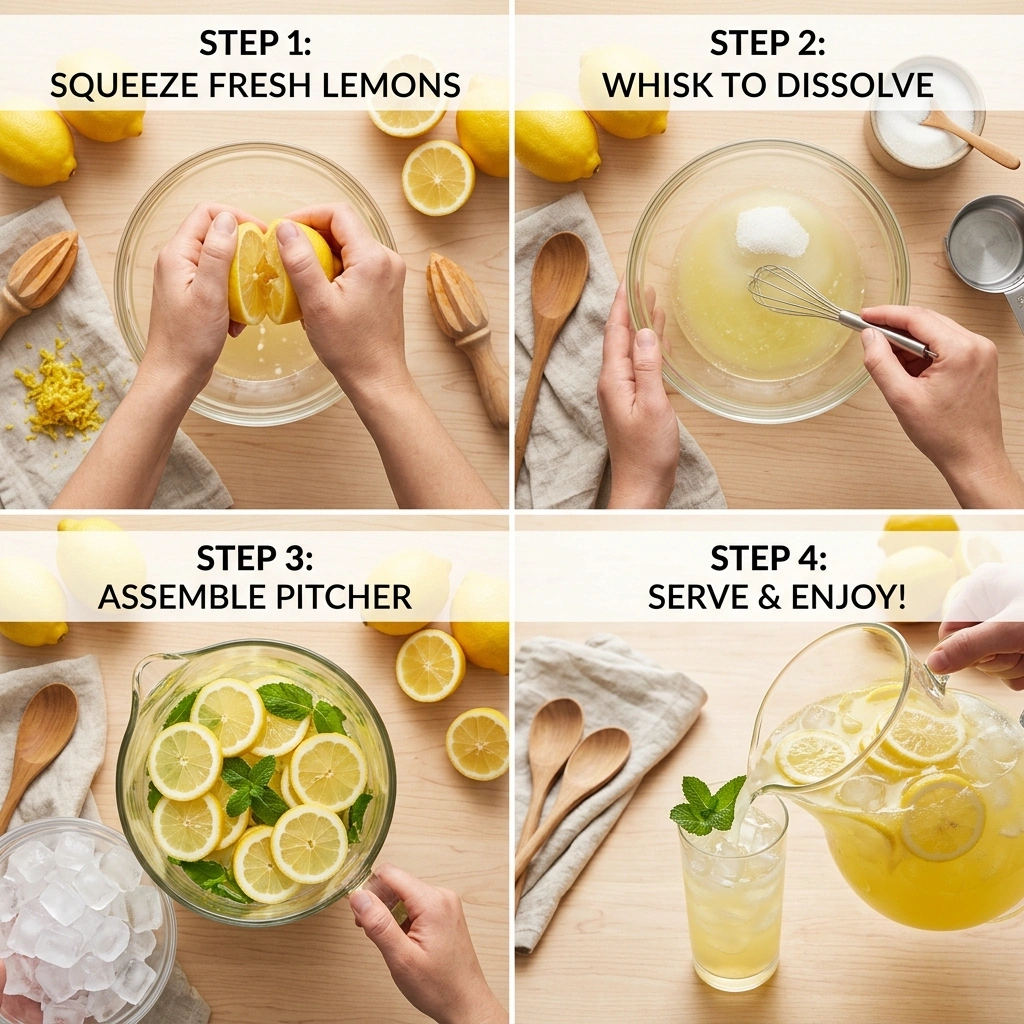
- Prepare the lemons: Wash them thoroughly, then roll each one on the countertop with gentle pressure. Cut them in half.
- Juice the lemons: Using a citrus juicer or reamer, extract the juice into a measuring cup, aiming for about 1 cup. Strain through a fine‑mesh sieve if you prefer a pulp‑free drink.
- Make the simple syrup: In a small saucepan, combine ¾ cup granulated sugar with ¼ cup water. Heat over medium, stirring until the sugar dissolves completely. Do not boil; just heat until clear.
- Combine: In your pitcher, pour the freshly squeezed lemon juice, then add the warm simple syrup. Stir to blend.
- Add water: Pour in 3 cups of cold water (reserving 1 cup for later adjustment). Stir well.
- Taste and adjust: Sample the lemonade. If it’s too tart, add a bit more simple syrup; if too sweet, add a splash of the reserved cold water. Continue until the flavor matches your preference.
- Chill: Add ice cubes to the pitcher or refrigerate for at least 30 minutes to allow the flavors to meld.
- Serve: Fill glasses with ice, pour the lemonade, and garnish with a lemon slice or a sprig of mint if desired.
Variations
While the classic version is perfect on its own, you can easily adapt it to suit different moods or seasonal produce:
- Herbal Infusion: Add a handful of fresh basil, rosemary, or thyme to the pitcher while it chills; remove before serving.
- Fruit‑Forward: Muddle a few strawberries, raspberries, or peach slices at the bottom of each glass before pouring the lemonade.
- Spiced Kick: Insert a thin slice of fresh ginger or a pinch of ground cardamom into the simple syrup for a warm undertone.
- Sparkling Twist: Replace half of the cold water with chilled sparkling water or club soda for a fizzy version.
- Lower‑Sugar Option: Substitute part of the granulated sugar with honey or agave syrup, adjusting to taste.

Classic Lemonade: Best Refreshing Drink
There’s something timeless about a glass of classic lemonade on a warm day. The bright citrus zing balanced with just the right amount of sweetness makes it a staple at picnics, barbecues, and lazy afternoons. Mastering the traditional recipe gives you a solid foundation to create a pitcher that’s consistently refreshing, authentically homemade, and perfectly balanced.
- Total Time: 40
- Yield: 1.5 liters
Ingredients
6-8 medium Fresh lemons (yielding 1 cup juice)
¾ cup Granulated sugar
4 cups Cold water (plus more to taste)
Ice cubes (for serving)
Lemon slices (for garnish)
Instructions
1. Juice: Roll lemons on the counter to release juices, then cut and squeeze to get 1 cup of juice. Strain if desired.
2. Syrup: In a small saucepan, heat ¾ cup sugar with ¼ cup water until dissolved into a clear syrup. Let cool slightly.
3. Combine: In a pitcher, combine the lemon juice and the simple syrup. Stir well.
4. Dilute: Add 3 cups of cold water, stirring to blend.
5. Taste & Serve: Sample the lemonade and add the reserved cup of water or more syrup to reach your preferred sweetness. Chill for 30 minutes, then serve over ice with lemon slices.
Notes
Pro-Tips:
• Make a simple syrup by dissolving sugar in warm water before adding to the juice—this prevents the drink from being gritty.
• Adjust sweetness to your liking; tartness can vary by lemon variety and ripeness.
• Roll your lemons on the counter with gentle pressure before cutting to maximize the juice yield.
Variations:
• Herbal: Muddle fresh mint, basil, or thyme in the bottom of each glass before pouring.
• Sparkling: Replace half the water with club soda or sparkling water for a fizzy treat.
• Fruit Infused: Muddle strawberries, raspberries, or ginger slices into the base for added flavor dimensions.
- Prep Time: 10
- Category: Drinks
- Method: Mix
- Cuisine: American
FAQ
Q: Can I use bottled lemon juice?
A: Bottled juice often contains preservatives and lacks the bright, fresh flavor of newly squeezed lemons. For the best taste, stick to fresh fruit.
Q: How long does homemade lemonade stay fresh?
A: Keep it refrigerated in a sealed container; it’s optimal within 3‑4 days. After that, the flavor may dull and the color may fade.
Q: Is it necessary to make a simple syrup?
A: While you can stir sugar directly into the cold liquid, it may not dissolve fully, leaving a gritty texture. A simple syrup guarantees smooth sweetness.
Q: Can I make lemonade ahead of time for a party?
A: Absolutely. Prepare the base (juice, syrup, water) and store it chilled. Add ice and garnish just before serving to prevent dilution.
Q: What if my lemonade is too bitter?
A: Bitterness can come from the pith. Make sure to avoid squeezing the white part of the peel. If bitterness persists, balance it with a bit more sweetener or a pinch of salt.
Conclusion
Mastering classic lemonade is a rewarding endeavor that brings a splash of sunshine to any occasion. By focusing on quality ingredients, proper technique, and a few simple tweaks, you can craft a drink that’s consistently crisp, sweet, and tangy. Feel free to explore the variations suggested, or keep it pure and timeless—either way, you’ll have a go‑to refreshment that’s sure to please.
For more delicious ideas, follow me on Pinterest