
Table of Contents
If you love cheesecake but don’t have the patience for a perfectly smooth, crack-free finish, then the Burnt Basque Cheesecake is your new best friend. This Spanish dessert is all about embracing the charred top and creamy, slightly wobbly center. Originating from the Basque Country in Spain, this dessert is as rustic as it is delicious. Forget about water baths and fancy techniques—this cheesecake is all about simplicity and bold flavor. Whether you’re a seasoned baker or a beginner, this recipe will become a staple in your dessert rotation.
Key Ingredients
The beauty of the Burnt Basque Cheesecake lies in its simplicity. With just a handful of ingredients, you can create a dessert that’s rich, creamy, and slightly caramelized on top. The key is using high-quality cream cheese and letting the natural flavors shine through. This is not a dessert that needs a lot of bells and whistles—just good ingredients and a bit of patience.
Ingredients List
| Ingredient | Quantity | Notes |
|---|---|---|
| Philadelphia cream cheese | 2.2 lbs (1 kg) | Room temperature. Can substitute with mascarpone. |
| Eggs | 7 | Large eggs, room temperature. |
| Sugar | 2 cups (400g) | For less sweetness, use 1.5 to 1.75 cups (300-350g). |
| Flour | 1 tablespoon | All-purpose flour. |
| Heavy cream | 6.5 fl oz (200ml or ⅘ cup) | Can substitute with half-and-half. |
Helpful Tools

To make the perfect Burnt Basque Cheesecake, you’ll need a few essential tools:
1. 10-inch (25 cm) springform pan – This is the traditional pan used for this recipe. It allows for easy removal once the cheesecake is set.
2. Electric mixer or whisk – To ensure a smooth and creamy batter, an electric mixer is ideal, though you can also use a metal spoon for a more traditional approach.
3. Parchment paper or wax paper – Lining the pan with parchment paper prevents the cheesecake from sticking and makes for easy removal.
Pro-Tips
- 1. Use room temperature ingredients – This ensures a smoother batter and helps the cheesecake bake evenly.
- 2. Don’t overmix – Once the ingredients are combined, stop mixing. Overmixing can incorporate too much air, leading to cracks.
- 3. Embrace the burn – The top should be dark and slightly charred. This is what gives the cheesecake its signature flavor.
- 4. Let it cool gradually – After baking, let the cheesecake cool on the counter for an hour before refrigerating. This prevents it from sinking too much in the center.
- 5. For a truly authentic experience, try this Basque Cheesecake Recipe Best Easy Dessert. It’s a fantastic way to explore more variations of this beloved dessert.
How to Make Burnt Basque Cheesecake
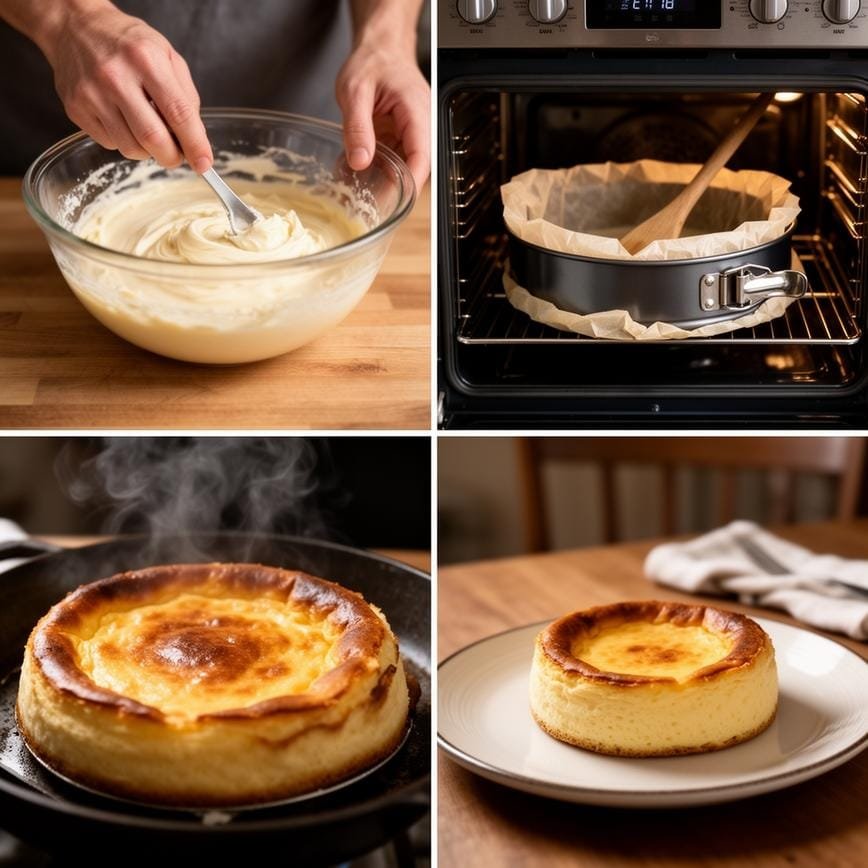
- 1. Preheat the oven to 410°F (210°C).
- 2. Mix the ingredients – Using an electric mixer, whisk, or a metal spoon, combine all the ingredients in a large bowl until smooth and creamy.
- 3. Prepare the pan – Line a 10-inch (25 cm) springform pan with enough wax or parchment paper that it extends past the edges of the pan. This will help you remove the cheesecake later and prevent it from sticking.
- 4. Bake – Pour the batter into the prepared pan and bake on the center rack for 35-50 minutes. The cake will rise quite a bit, but don’t worry—it will settle when it’s out of the oven. For a slightly runny center, remove at 35 minutes. For a more set center, bake for 40-50 minutes.
- 5. Check for doneness – The cake should be brown and almost burnt-looking on top. The center shouldn’t be completely set and will wiggle like Jello when you move the pan.
- 6. Cool gradually – Turn the oven off and let the cheesecake start to cool gradually by leaving it out on the counter for an hour or so.
- 7. Refrigerate – Move the cake to the fridge to cool completely. This will take a few hours, and overnight is even better.
- 8. Serve – Once chilled, remove the cheesecake from the parchment paper, cut, plate, and enjoy!
Variations
While the classic Burnt Basque Cheesecake is delicious on its own, there are plenty of ways to mix it up:
1. Citrus twist – Add a tablespoon of lemon or orange zest to the batter for a bright, citrusy flavor.
2. Berry swirl – Swirl in some raspberry or blueberry compote for a fruity twist.
3. Chocolate drizzle – Once the cheesecake is set, drizzle melted chocolate on top for a decadent finish.
Burnt Basque Cheesecake
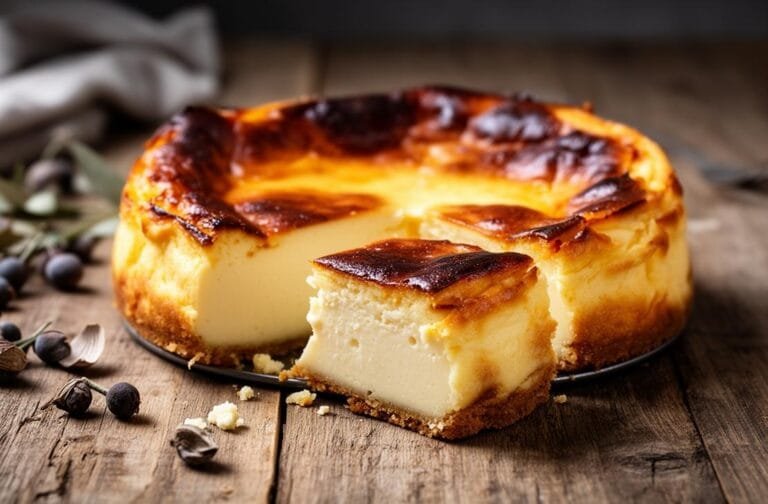
This Burnt Basque Cheesecake (San Sebastian Cheesecake) is the rebellious cousin of the classic New York style. Baked at a high temperature, it develops a deeply caramelized, dark brown exterior that tastes like toasted marshmallows, while the inside remains impossibly creamy and custard-like. It is rustic, crustless, and practically foolproof.
- Total Time: 255
- Yield: 12 slices
Ingredients
2 lbs (900g) cream cheese (4 blocks), softened to room temperature
1 ½ cups (300g) granulated sugar
6 large eggs, room temperature
2 cups (480ml) heavy whipping cream (liquid)
1 teaspoon salt
1 teaspoon vanilla extract
⅓ cup (40g) all-purpose flour (sifted)
Instructions
1. **Preheat:** Position a rack in the middle of your oven and preheat to 400°F (200°C). (Note: This is hotter than normal cheesecakes—that’s the point!).
2. **Prepare the Pan:** Grease a 9-inch or 10-inch springform pan lightly with butter. Line the pan with **two** sheets of parchment paper, overlapping them so they cover the bottom and extend at least 2 inches above the rim. Press the paper into the corners and pleat the sides—it should look rustic and messy.
3. **Mix Cheese & Sugar:** In the bowl of a stand mixer fitted with the paddle attachment (or a large bowl with a hand mixer), beat the cream cheese and sugar on medium-low speed until very smooth and the sugar has dissolved (about 2 minutes). Scrape down the sides.
4. **Add Eggs:** Add the eggs one at a time, beating on medium-low speed for about 15 seconds after each addition. Scrape the bowl again.
5. **Add Liquids:** Pour in the heavy cream, salt, and vanilla extract. Mix on low speed just until combined.
6. **Add Flour:** Turn the mixer off. Sift the flour evenly over the batter. Mix on low speed just until the flour disappears. **Do not overmix** or incorporate too much air.
7. **Bake:** Pour the batter into the parchment-lined pan. Place the pan on a baking sheet (in case of leaks). Bake for 50–60 minutes.
8. **The ‘Burnt’ Look:** The cheesecake is done when the top is dark brown (it might look burnt—don’t panic!) and the edges are set, but the center is still very jiggly like Jell-O. It will rise high like a soufflé and fall as it cools.
9. **Cool:** Remove from the oven and let it cool completely in the pan on a wire rack. This takes about 3–4 hours. It will set as it cools.
10. **Serve:** Once cool, unclasp the springform pan and peel back the parchment paper. Serve at room temperature for the creamiest texture.
Notes
Room Temperature Ingredients: This is non-negotiable! If your cream cheese or eggs are cold, you will have lumps in your batter.
The Parchment: Don’t try to make the parchment paper neat. The crinkles in the paper give the sides of the cheesecake its signature rustic texture.
Serving Temperature: Unlike NY cheesecake which is best chilled, Basque cheesecake is traditionally served at room temperature so the center stays soft and gooey.
Gluten-Free: You can substitute the flour with cornstarch or gluten-free 1:1 flour for a GF version.
- Prep Time: 15
- Cook Time: 60
- Category: Dessert
- Method: Bake
- Cuisine: Spanish (Basque)
- Diet: Vegetarian
FAQ
Q: Can I use a different type of cream cheese?
A: Yes, you can substitute with mascarpone or any other cream cheese. Just make sure it’s at room temperature for the best results.
Q: Why is my cheesecake too runny in the center?
A: The center should be slightly wobbly, but if it’s too runny, it may need a few more minutes in the oven. Just be careful not to overbake it.
Q: Can I make this cheesecake ahead of time?
A: Absolutely! This cheesecake actually tastes even better the next day. Just make sure it’s properly covered and stored in the fridge.
For more delicious ideas, follow me on Pinterest