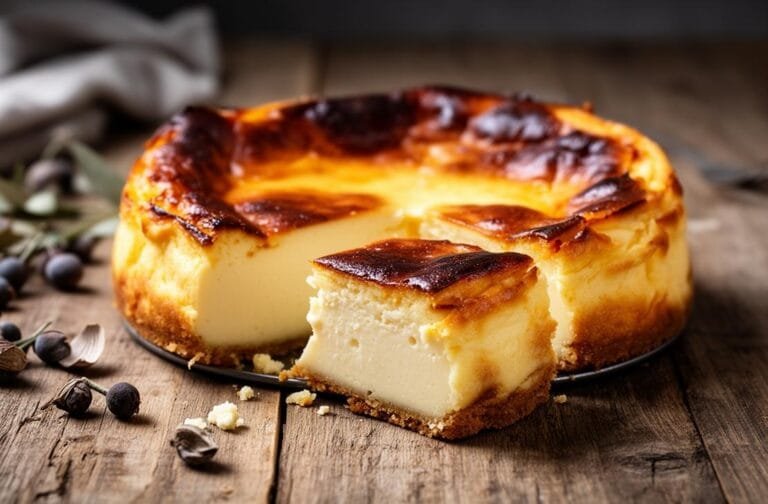
Ingredients
2 lbs (900g) cream cheese (4 blocks), softened to room temperature
1 ½ cups (300g) granulated sugar
6 large eggs, room temperature
2 cups (480ml) heavy whipping cream (liquid)
1 teaspoon salt
1 teaspoon vanilla extract
⅓ cup (40g) all-purpose flour (sifted)
Instructions
1. **Preheat:** Position a rack in the middle of your oven and preheat to 400°F (200°C). (Note: This is hotter than normal cheesecakes—that’s the point!).
2. **Prepare the Pan:** Grease a 9-inch or 10-inch springform pan lightly with butter. Line the pan with **two** sheets of parchment paper, overlapping them so they cover the bottom and extend at least 2 inches above the rim. Press the paper into the corners and pleat the sides—it should look rustic and messy.
3. **Mix Cheese & Sugar:** In the bowl of a stand mixer fitted with the paddle attachment (or a large bowl with a hand mixer), beat the cream cheese and sugar on medium-low speed until very smooth and the sugar has dissolved (about 2 minutes). Scrape down the sides.
4. **Add Eggs:** Add the eggs one at a time, beating on medium-low speed for about 15 seconds after each addition. Scrape the bowl again.
5. **Add Liquids:** Pour in the heavy cream, salt, and vanilla extract. Mix on low speed just until combined.
6. **Add Flour:** Turn the mixer off. Sift the flour evenly over the batter. Mix on low speed just until the flour disappears. **Do not overmix** or incorporate too much air.
7. **Bake:** Pour the batter into the parchment-lined pan. Place the pan on a baking sheet (in case of leaks). Bake for 50–60 minutes.
8. **The ‘Burnt’ Look:** The cheesecake is done when the top is dark brown (it might look burnt—don’t panic!) and the edges are set, but the center is still very jiggly like Jell-O. It will rise high like a soufflé and fall as it cools.
9. **Cool:** Remove from the oven and let it cool completely in the pan on a wire rack. This takes about 3–4 hours. It will set as it cools.
10. **Serve:** Once cool, unclasp the springform pan and peel back the parchment paper. Serve at room temperature for the creamiest texture.
Notes
Room Temperature Ingredients: This is non-negotiable! If your cream cheese or eggs are cold, you will have lumps in your batter.
The Parchment: Don’t try to make the parchment paper neat. The crinkles in the paper give the sides of the cheesecake its signature rustic texture.
Serving Temperature: Unlike NY cheesecake which is best chilled, Basque cheesecake is traditionally served at room temperature so the center stays soft and gooey.
Gluten-Free: You can substitute the flour with cornstarch or gluten-free 1:1 flour for a GF version.
- Prep Time: 15
- Cook Time: 60
- Category: Dessert
- Method: Bake
- Cuisine: Spanish (Basque)
- Diet: Vegetarian