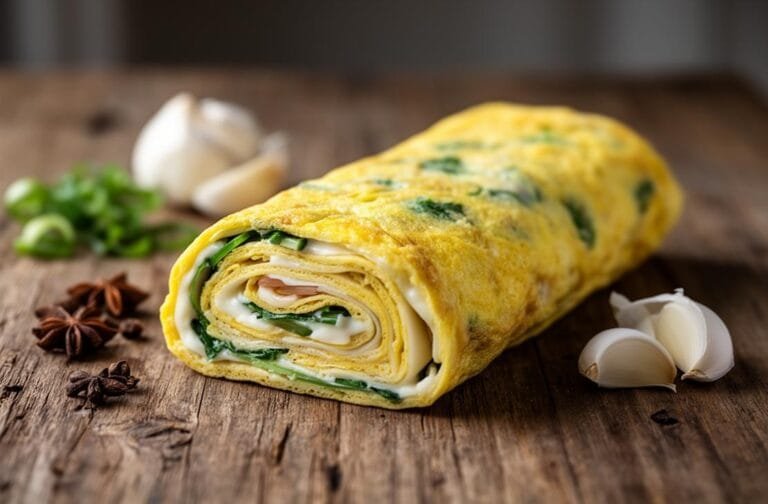
Ingredients
5 large eggs
1 tablespoon milk (or water, for fluffiness)
1 tablespoon finely chopped carrot
1 tablespoon finely chopped green onion (scallion)
1 tablespoon finely chopped onion (optional)
1 tablespoon finely chopped ham or spam (optional for extra protein)
½ teaspoon salt
Pinch of black pepper
Vegetable oil (for greasing the pan)
Instructions
1. **Prepare the Veggies:** Finely chop the carrots, green onions, and any other mix-ins. It is crucial to chop them very small so the omelette rolls smoothly without breaking.
2. **Whisk:** Crack the eggs into a large bowl (preferably one with a pouring spout). Add the milk, salt, and pepper. Whisk thoroughly until the yolks and whites are completely combined and no streaks remain. Stir in the chopped vegetables and ham.
3. **Heat Pan:** Heat a non-stick skillet (a square tamagoyaki pan is traditional, but a round 10-inch skillet works too) over medium-low heat. Brush the pan lightly with oil or wipe it with an oiled paper towel.
4. **First Layer:** Pour about ¼ of the egg mixture into the pan to cover the bottom thinly. Swirl the pan to coat evenly.
5. **Roll:** When the egg is set on the bottom but still slightly wet on top (about 2 minutes), gently lift one edge with a spatula and fold it over about 1 inch. Continue rolling the egg up until you reach the end. Push the rolled egg to the side of the pan.
6. **Second Layer:** Brush a little more oil on the empty part of the pan. Pour another ¼ of the egg mixture into the empty space. **Important:** Lift the cooked egg roll slightly so the raw egg flows underneath it—this bonds the layers together.
7. **Repeat:** Once the new layer is mostly set, roll the cooked log over the new egg. Repeat this process until all the egg mixture is used.
8. **Shape & Serve:** Remove the finished log from the pan and let it cool on a cutting board for 5 minutes (this helps it hold its shape). Slice into thick, even rounds and serve.
Notes
Heat Control: Patience is key! Keep the heat on medium-low. If the pan is too hot, the eggs will brown too quickly and become rubbery before you can roll them.
Pan Choice: A square Japanese/Korean egg pan makes neat rectangular edges, but you can absolutely use a round non-stick skillet. The ends will just be thinner than the middle.
Fillings: You can add almost anything as long as it is chopped finely—minced mushrooms, zucchini, cheese, or even crab meat work great.
Storage: These keep beautifully in the fridge for up to 3 days and are a popular addition to lunchboxes (Dosirak/Bento).
- Prep Time: 10
- Cook Time: 10
- Category: Breakfast
- Method: Stovetop
- Cuisine: Korean
- Diet: Gluten Free