Table of Contents
One batter. One pan. Three completely different layers that appear on their own in the oven — no layering, no assembly, no pastry skill required.
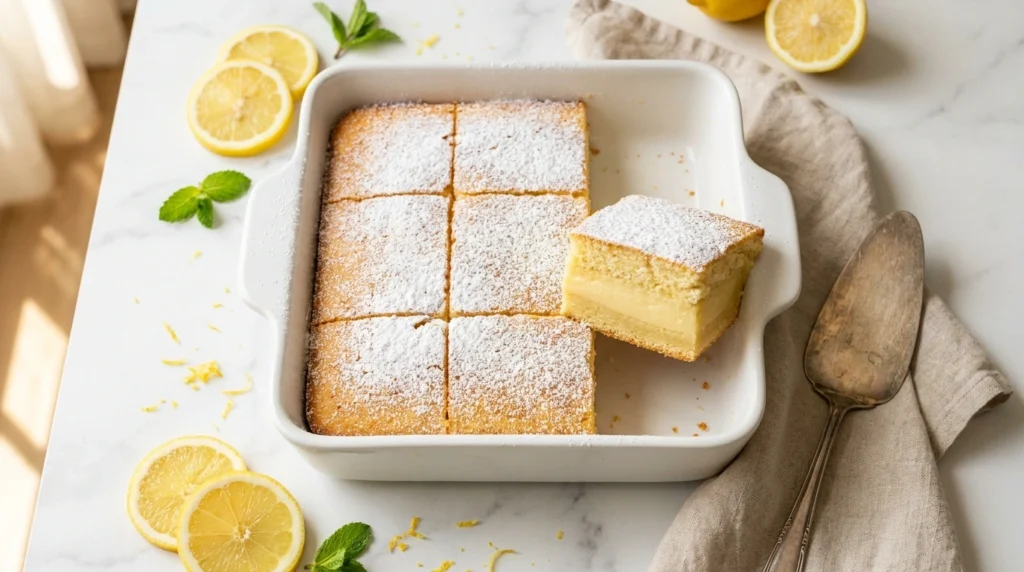
This Lemon Custard Cake is one of those recipes that feels like a magic trick even after you understand exactly how it works. You pour in a batter so thin it looks almost like soup, slide it into the oven, and forty minutes later you lift out a cake with a delicate sponge top, a silky lemon custard center, and a dense, moist base — all from the same single pour. Then you dust it with powdered sugar, cut it into squares, and wait for everyone at the table to ask how you did it.
The answer is science, but the experience is pure magic.
What Is Lemon Custard Cake?
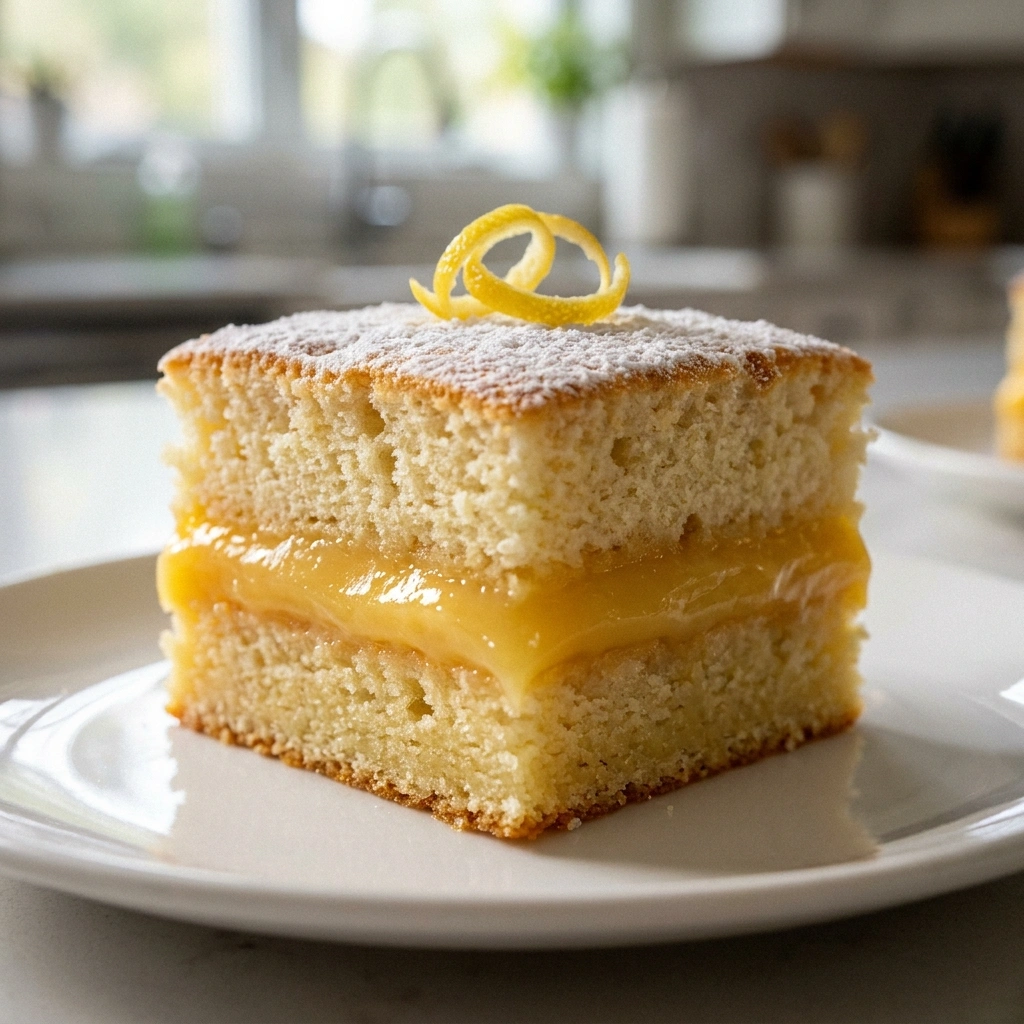
Lemon Custard Cake — sometimes called magic lemon cake — is a single-batter cake that separates into three distinct layers during baking. It belongs to a broader family of “magic cakes” that became wildly popular in home baking circles because of the dramatic payoff for relatively little effort.
The science behind the layers is straightforward. The very thin batter, combined with partially folded egg whites, separates in the oven based on density. The egg white foam rises to the top and bakes into a light sponge. The heavier flour-and-yolk mixture sinks to the bottom and sets into a dense, moist base. Everything in between — the custard layer — sets gently from the residual heat of the oven and the proteins in the milk and eggs, creating a silky, creamy center that never fully firms up.
The result is one cake that tastes like three different desserts in every single bite.
Why You’ll Love This Recipe
- One batter creates three layers automatically — no assembly required
- Made entirely from scratch with simple pantry ingredients
- Bright, fresh lemon flavor from both juice and zest
- Light and elegant — nothing heavy or overly sweet
- Impressive enough to serve at a dinner party, easy enough for a weekday
- Stores well in the fridge and tastes even better the next day when fully chilled
Ingredients
(Yields one 8×8 cake | Prep: 20 mins | Cook: 40–60 mins)
- 4 large eggs, room temperature — separated
- ¾ cup granulated sugar
- ½ cup unsalted butter, melted and slightly cooled
- 1 teaspoon vanilla extract
- ¾ cup all-purpose flour
- ¼ cup freshly squeezed lemon juice — please use fresh, not bottled
- Zest from 2 large lemons
- 1¾ cups milk, lukewarm
- Powdered sugar for dusting
Two things that truly matter here: First, your eggs must be at room temperature — cold eggs don’t whip properly and the whites won’t reach stiff peaks. Second, your milk must be lukewarm, not cold. Cold milk hitting the warm butter causes it to resolidify and creates an uneven batter. Warm everything up before you begin and the recipe becomes effortless.
MapRecipes · Easy Cakes · Magic Cake
Lemon Custard Cake
One batter. One pan. Three magical layers — airy sponge on top, silky lemon custard in the center, dense moist base at the bottom. All on their own.
Ingredients
- 4 large eggs, room temp — separated
- ¾ cup granulated sugar
- ½ cup unsalted butter, melted & slightly cooled
- 1 tsp vanilla extract
- ¾ cup all-purpose flour
- ¼ cup fresh lemon juice
- Zest from 2 large lemons
- 1¾ cups milk, lukewarm
- Powdered sugar for dusting
Instructions
-
1Preheat & prep pan
Preheat oven to 325°F (165°C). Line an 8×8-inch baking dish with parchment paper with overhang on the sides. Lightly grease with cooking spray.
-
2Whip egg whites
Whip egg whites with a hand mixer until stiff peaks form — they should stand straight up when you lift the beaters. Set aside.
-
3Beat yolks & sugar
Beat egg yolks and sugar together until pale yellow and slightly thickened, about 2–3 minutes.
-
4Add butter & vanilla
Add melted, slightly cooled butter and vanilla extract. Mix until evenly combined.
-
5Add flour
Mix in flour on low speed until just incorporated. Do not overmix.
-
6Add lemon
Add fresh lemon juice and lemon zest from both lemons. Mix until combined.
-
7Beat in milk
Slowly beat in the lukewarm milk. The batter will be very thin — almost like liquid. This is completely normal and correct.
-
8Fold in egg whites
Add stiff egg whites and whisk gently by hand. Leave small white lumps visible — do not fully incorporate. These lumps float to the top and create the sponge layer.
-
9Bake
Pour into the prepared pan and bake for 40–60 minutes, checking from 35 minutes. Done when top is firm to touch with a slight jiggle in the center. Cover loosely with foil if top browns too fast.
-
10Cool & serve
Cool completely at room temperature, then refrigerate at least 1 hour. Lift out using parchment overhang, dust with powdered sugar, and slice into squares.
Pro tips
How to Make Lemon Custard Cake
Step 1 — Preheat and Prepare Your Pan
Preheat your oven to 325°F. Line an 8×8-inch baking dish with parchment paper, leaving overhang on the sides — this makes lifting the finished cake out completely painless. Lightly grease the parchment with cooking spray and set the pan aside.
Note: The lower temperature of 325°F is intentional. This cake needs gentle, even heat to set the custard layer properly. A hotter oven rushes the process and can scramble the custard before it has a chance to set smoothly.
Step 2 — Whip the Egg Whites
Separate your eggs carefully — even a trace of yolk in the whites will prevent them from whipping. Using a hand mixer or stand mixer with a clean, dry bowl, whip the egg whites on medium-high speed until stiff peaks form. When you lift the beaters, the peaks should stand straight up without drooping. Set the bowl aside.
This step is the key to the magic. The stiff egg whites are what create the sponge top layer. Under-whipped whites mean no distinct top layer.
Step 3 — Beat Yolks and Sugar
In a large mixing bowl, beat the egg yolks and sugar together until the mixture turns pale yellow and slightly thickened. This takes about 2–3 minutes with a hand mixer on medium speed.
Step 4 — Add Butter and Vanilla
Pour in the melted, slightly cooled butter and the vanilla extract. Mix until evenly combined. Make sure the butter is not hot — warm is fine, but hot butter begins to cook the egg yolks.
Step 5 — Mix in the Flour
Add the flour and mix on low speed just until incorporated. Do not overmix at this stage — you want the flour fully combined but you are not developing gluten here.
Step 6 — Add Lemon Juice and Zest
Add the freshly squeezed lemon juice and the lemon zest from both lemons. Mix until combined. The zest is where most of the lemon flavor lives — do not skip it or reduce it. Two full lemons of zest is exactly the right amount for a bright, forward lemon flavor.
Step 7 — Beat in the Milk
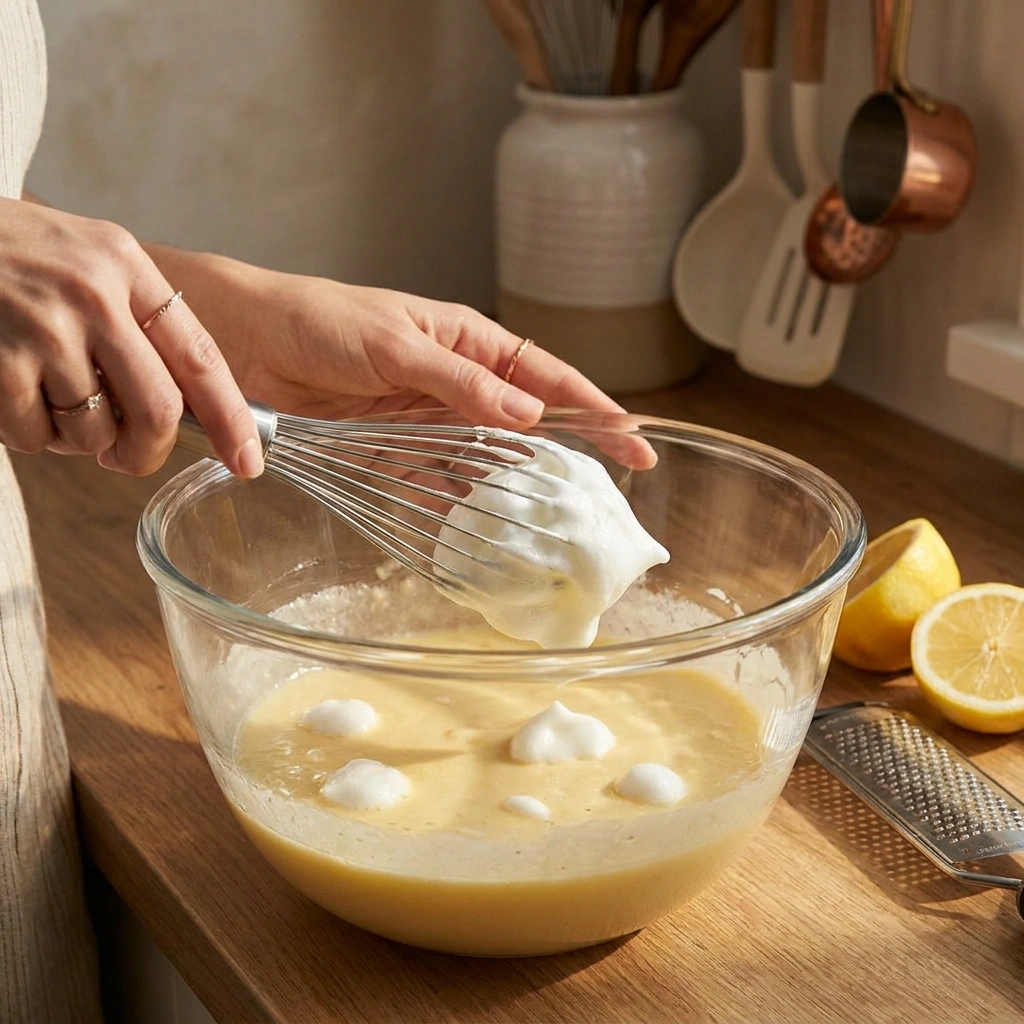
With the mixer on low speed, slowly pour in the lukewarm milk. Mix until well combined. At this point the batter will look extremely thin — almost like lemon-tinted water with a little foam. This is completely normal and exactly correct.
⚠️ The batter is supposed to be this thin. Many first-time bakers panic at this stage and think something went wrong. It did not. The thin consistency is precisely what allows the layers to separate in the oven. Trust the process.
Step 8 — Fold in the Egg Whites
Add the stiff egg whites to the batter and whisk by hand — gently, but without obsessing over incorporating every last bit. You want small lumps of egg white visible in the batter. Do not fold them in completely. Those white lumps will float to the surface during baking and form the sponge top layer. A perfectly smooth batter at this stage actually produces a worse result.
Step 9 — Bake
Pour the batter into the prepared pan — it will look extremely liquid going in — and place it in the preheated oven. Bake for 40 to 60 minutes, starting to check at the 35-minute mark.
The cake is done when the top is firm to the touch but the center still has a very slight, gentle jiggle — similar to a cheesecake or a well-set custard. If the top is browning too quickly before the center sets, lay a sheet of aluminum foil loosely over the top for the remaining bake time.
⚠️ Do not overbake. This is the single most important rule for this recipe. An overbaked Lemon Custard Cake loses its custard center entirely and the texture turns rubbery rather than silky. When in doubt, pull it out early — it will continue to set as it cools.
Step 10 — Cool Completely
Remove the cake from the oven and allow it to cool completely in the pan at room temperature before touching it. The custard layer needs time to fully set as the cake cools. Once at room temperature, transfer to the refrigerator for at least 1 hour before slicing for the cleanest cuts and the best texture.
Step 11 — Dust and Serve
Lift the cake out using the parchment overhang. Dust generously with powdered sugar just before serving. Cut into squares and serve chilled or at cool room temperature.
What to Serve It With
This cake is elegant on its own but pairs beautifully with:
- Fresh berries — raspberries, blueberries, or sliced strawberries cut through the richness
- Lightly sweetened whipped cream — a small dollop alongside each square
- A cup of Earl Grey or chamomile tea — the citrus notes in the cake pair perfectly
- A drizzle of fresh berry coulis — blend raspberries with a teaspoon of sugar for a simple, stunning sauce
Pro Tips for Perfect Lemon Custard Cake
Room temperature eggs are non-negotiable. Cold egg whites do not whip to stiff peaks. If you forgot to take them out ahead of time, place the whole eggs in a bowl of warm water for 10 minutes before separating.
Use fresh lemon juice and zest, not bottled. Bottled lemon juice is too mild and acidic in a flat, artificial way. Fresh lemon juice and real zest give the cake its bright, complex lemon flavor. Two lemons worth of zest is the right amount — do not reduce it.
Warm your milk before adding it. Cold milk causes the melted butter in the batter to seize and solidify. Lukewarm milk — about the temperature of a warm bath — keeps everything smooth and well combined.
Leave the egg white lumps. The most common mistake with this recipe is folding the egg whites in too thoroughly. The lumps are intentional. They float to the surface and form the sponge top. A perfectly smooth batter produces a flat, dense result with no distinct top layer.
Start checking at 35 minutes. Ovens vary significantly. The range of 40–60 minutes is real — some ovens set this cake in 38 minutes, others take the full hour. Watch the top rather than the clock. Firm to the touch on top, slight jiggle in the very center, and you are done.
Chill before slicing. The layers are cleanest and most defined after the cake has spent at least an hour in the refrigerator. Slicing a warm Lemon Custard Cake will give you beautiful layers that look messy on the plate.
Make-Ahead and Storage
Make ahead: This cake is an ideal make-ahead dessert. Bake it the day before, cool completely, cover with plastic wrap, and refrigerate overnight. Dust with powdered sugar just before serving.
Refrigerator: Store covered in the refrigerator for up to 4 days. The custard layer actually improves with a night in the fridge — it becomes more set, the lemon flavor deepens, and the layers become more distinct.
Freezer: This cake does not freeze well due to the custard layer. The texture of the custard changes after freezing and thawing. Enjoy it fresh within 4 days.
Common Questions
Why didn’t my cake form three layers? The most likely cause is under-whipped egg whites. If the whites were not at stiff peaks before being added, they lack the structure to float to the top and form the sponge layer. The second cause is over-folding — mixing the whites in too thoroughly removes the lumps that create the top layer.
My cake is rubbery in the center — what happened? The cake was overbaked. The custard layer sets gently and requires residual heat after leaving the oven to finish. Next time, pull the cake when the center has a slight jiggle rather than waiting for it to look completely firm.
Can I use bottled lemon juice? Technically yes, but the flavor will be noticeably flatter. Fresh lemon juice and zest are what give this cake its bright, complex lemon flavor. Bottled juice can work in an emergency but the result will not be the same.
My batter looks like water — is that right? Yes. The batter for this cake is intentionally very thin. It looks alarming the first time you make it. This is correct. The thin consistency is what allows the layers to separate during baking. Pour it in confidently.
Can I make this in a different pan size? An 8×8-inch pan is the right size for this recipe. A 9×13 pan will spread the batter too thin and the layers will not form properly. If you want a larger batch, make two separate 8×8 pans rather than scaling up into a larger pan.
Can I use a different citrus? Yes — this recipe works beautifully with orange (use ¼ cup fresh orange juice and the zest of 2 oranges), lime (reduce to 3 tablespoons of lime juice as it is more acidic), or a combination of lemon and lime for a more complex citrus flavor.
The Takeaway
Lemon Custard Cake earns its place in the magic cake category — not because it requires any special skill, but because the result is so dramatically different from what the process suggests. A thin, almost liquid batter. A modest 325°F oven. Forty to sixty minutes of patience. And what comes out is a cake with three completely different textures, a silky lemon custard heart, and a freshness that no store-bought dessert can replicate.
You can try also Lemon Poppy Seed Muffins.
Make it once and it becomes your signature dessert.
Tried this recipe? Tag us on Pinterest @Recipesmaps — we love seeing your layers! Drop a comment below and tell us how many people asked for the recipe.