
Table of Contents
When you’re craving something savory, sweet, and satisfying without spending hours in the kitchen, Mongolian Ground Beef Noodles are the answer. This dish combines the rich, umami flavors of Mongolian beef with the comforting texture of noodles, all prepared in under 30 minutes. Perfect for busy weeknights, this recipe delivers restaurant-quality taste with minimal effort.
Key Ingredients
The magic of Mongolian Ground Beef Noodles lies in its simple yet powerful ingredients. Ground beef provides a hearty base, while garlic adds aromatic depth. The sauce—a blend of soy sauce, hoisin, brown sugar, and beef broth—creates that signature sweet-savory balance. A touch of ginger and red pepper flakes brings warmth and complexity, while cornstarch ensures the sauce clings perfectly to every noodle.

Ingredients List
| Ingredient | Quantity |
|---|---|
| Ground beef | 1 lb |
| Garlic, minced | 5 cloves |
| Brown sugar | 1/3 cup |
| Beef broth | 1/4 cup |
| Soy sauce | 1/3 cup |
| Hoisin sauce | 3 tablespoons |
| Ground ginger | 1/2 teaspoon |
| Ground black pepper | 1/2 teaspoon |
| Red pepper flake (optional) | Pinch |
| Linguine | 10 oz |
| Cornstarch | 1 tablespoon |
| Water | 2 tablespoons |
| Green onions, sliced | 4 |
Helpful Tools
Having the right tools makes preparing Mongolian Ground Beef Noodles even easier. Here are three essentials:
- Large Skillet or Wok: Ideal for browning the beef and simmering the sauce evenly.
- Large Pot: For boiling the linguine to al dente perfection.
- Whisk: Helps dissolve the cornstarch smoothly into the sauce without lumps.
Pro-Tips for Perfect Mongolian Ground Beef Noodles
- Don’t Skip the Cornstarch Slurry: Mixing cornstarch with cold water before adding it to the hot sauce prevents clumping and ensures a silky, glossy finish.
- Let Noodles Absorb the Sauce: After combining the noodles with the beef and sauce, let them sit for 2-3 minutes. This step allows the noodles to soak up more flavor, making every bite irresistible. Slow Cooker Beef Ramen Noodles are another great way to enjoy rich, saucy noodles if you love this style.
- Use Fresh Garlic: Freshly minced garlic provides a more vibrant flavor compared to pre-minced or powdered versions.
- Adjust Spice Level: The pinch of red pepper flakes is optional but recommended for a subtle kick. Feel free to increase or omit based on your heat preference.
- Garnish Generously: Sliced green onions add a fresh, crisp contrast to the rich, savory dish. Don’t skip them!
How to Make Mongolian Ground Beef Noodles
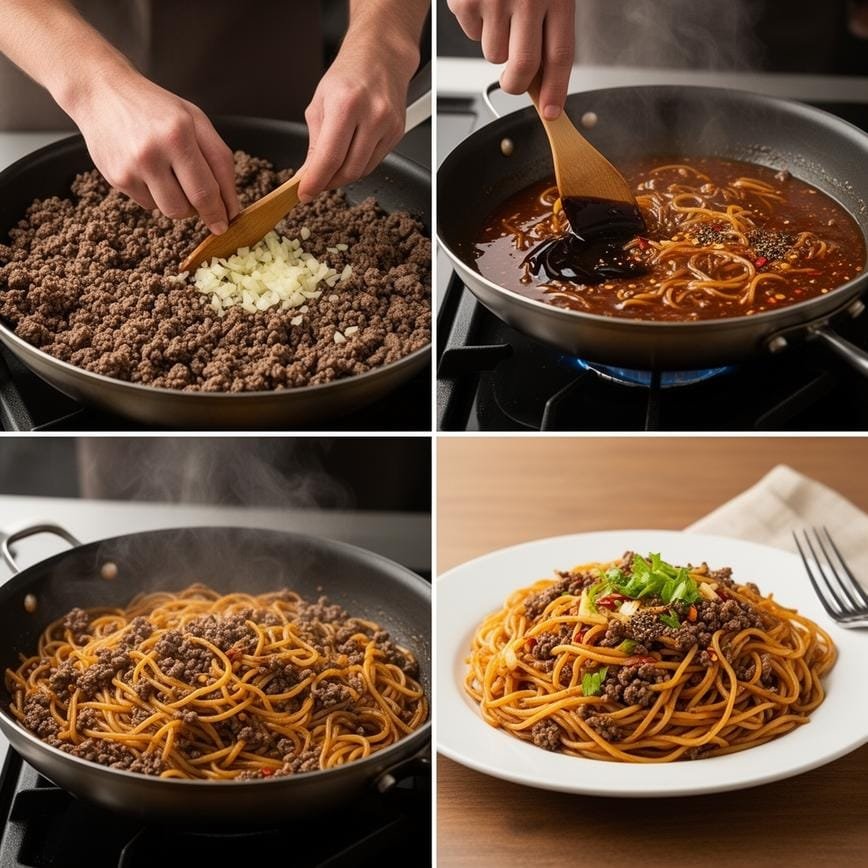
- Cook the Pasta: Bring a large pot of water to a boil. Add the linguine and cook according to package directions until al dente. Drain and set aside.
- Brown the Beef: In a large skillet over medium-high heat, add the ground beef. Cook until no longer pink, breaking it apart with a spatula as it cooks. Drain excess fat if necessary.
- Add Garlic: Stir in the minced garlic and cook for about 1 minute until fragrant.
- Make the Sauce: Add soy sauce, beef broth, brown sugar, hoisin sauce, ground ginger, black pepper, and red pepper flakes (if using). Stir well to combine.
- Thicken the Sauce: In a small bowl, dissolve the cornstarch in 2 tablespoons of cold water. Pour the mixture into the skillet and stir. Bring to a gentle boil until the sauce thickens.
- Combine Noodles and Sauce: Add the cooked linguine to the skillet. Toss everything together until the noodles are evenly coated. Let sit for 2-3 minutes to absorb the flavors.
- Garnish and Serve: Top with sliced green onions and serve hot.
Variations to Try
Once you’ve mastered the classic version, experiment with these delicious twists:
- Add Vegetables: Toss in broccoli florets, bell peppers, or snap peas for added color, texture, and nutrition.
- Swap the Protein: Ground turkey, chicken, or even crumbled tofu can be used instead of beef for a lighter or vegetarian option.
- Change the Noodles: Try rice noodles, udon, or even zucchini noodles for a gluten-free or low-carb version.
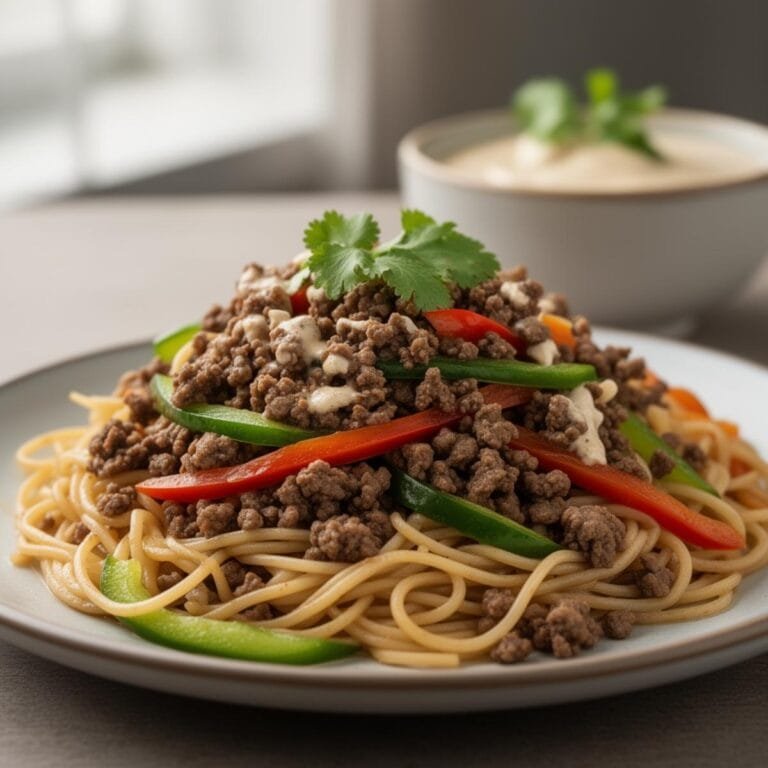
Mongolian Ground Beef Noodles
These Mongolian Ground Beef Noodles are the ultimate 20-minute weeknight dinner savior. By swapping expensive steak for budget-friendly ground beef, you get all the sweet and savory flavors of classic Mongolian Beef in a fraction of the time. The sauce is sticky, garlicky, and rich with ginger and brown sugar, coating every strand of noodle for a takeout-style meal the whole family will love.
- Total Time: 25
- Yield: 4 servings
Ingredients
— The Stir-Fry Base —
1 lb (450g) lean ground beef (90% lean preferred)
8–10 oz dry noodles (ramen, rice noodles, linguine, or spaghetti)
2 teaspoons vegetable oil or sesame oil
4 cloves garlic, minced
1 tablespoon fresh ginger, grated (or 1 tsp ground ginger)
— The Mongolian Sauce —
½ cup beef broth (low sodium)
½ cup soy sauce (low sodium is best to control saltiness)
1/3 cup brown sugar, packed
2 tablespoons hoisin sauce (optional, for depth)
1 tablespoon cornstarch mixed with 2 tablespoons cold water (slurry)
½ teaspoon red pepper flakes (optional, for heat)
— Garnish —
2 green onions, sliced (green and white parts)
1 teaspoon toasted sesame seeds
Instructions
1. **Boil Noodles:** Bring a large pot of water to a boil. Cook the noodles according to package instructions until al dente. Drain and set aside. (Tip: If using spaghetti, rinse with cold water to prevent sticking).
2. **Brown Beef:** While the water boils, heat the oil in a large skillet or wok over medium-high heat. Add the ground beef and cook, breaking it up with a wooden spoon, until browned and no longer pink (about 5–7 minutes). Drain any excess grease if necessary.
3. **Add Aromatics:** Add the minced garlic and grated ginger to the beef. Sauté for 1 minute until fragrant, being careful not to burn the garlic.
4. **Simmer Sauce:** In a small bowl or jar, whisk together the beef broth, soy sauce, brown sugar, hoisin sauce, and red pepper flakes. Pour this mixture over the beef in the skillet. Bring to a simmer and let it bubble for 2 minutes.
5. **Thicken:** Stir the cornstarch slurry (cornstarch + water) again to ensure it’s smooth, then pour it into the simmering sauce. Stir constantly for 1 minute until the sauce thickens and becomes glossy.
6. **Toss:** Add the cooked noodles to the skillet. Toss everything together using tongs until the noodles are evenly coated in the sticky meat sauce.
7. **Serve:** Remove from heat. Top generously with sliced green onions and toasted sesame seeds. Serve hot!
Notes
Noodle Choice: This recipe is incredibly versatile. Instant ramen noodles (discard the flavor packet), rice noodles, or even standard spaghetti work perfectly.
Veggie Boost: Want more nutrition? Toss in a bag of frozen broccoli florets or shredded carrots while the beef is browning, or wilt in some spinach at the very end.
Control the Sweetness: Mongolian beef is famous for being sweet. If you prefer a more savory dish, reduce the brown sugar to 1/4 cup.
Meal Prep: This dish reheats beautifully. Store in an airtight container for up to 4 days. If the noodles absorb all the sauce, add a splash of water when reheating.
- Prep Time: 10
- Cook Time: 15
- Category: Dinner
- Method: Stir Fry
- Cuisine: Asian-American
Frequently Asked Questions
Can I make Mongolian Ground Beef Noodles ahead of time?
Yes! Prepare the dish as directed, let it cool, and store it in an airtight container in the refrigerator for up to 3 days. Reheat gently on the stovetop or microwave, adding a splash of beef broth if needed.
What can I use instead of hoisin sauce?
If you don’t have hoisin sauce, you can substitute with an equal amount of oyster sauce mixed with a teaspoon of honey or brown sugar for sweetness.
Can I freeze Mongolian Ground Beef Noodles?
While you can freeze the beef and sauce mixture, the noodles may become mushy upon thawing. For best results, freeze the sauce separately and cook fresh noodles when ready to serve.
Conclusion
Mongolian Ground Beef Noodles are the ultimate quick-fix dinner that doesn’t compromise on flavor. With simple ingredients, easy steps, and endless customization options, this dish is sure to become a family favorite. For more delicious ideas, follow me on Pinterest.